#WPRD2026 | Trust, not traffic: What Nigeria's AI reckoning teaches South African communicators

At WGN Africa, we're a Pan-African through-the-line (TTL) PR and Communications agency, delivering integrated communications across earned, owned and shared media to create value for profit, people and purpose.
Working across African markets gives us a unique perspective on how communications trends evolve across the continent.
What we're seeing in Nigeria isn't simply a local media story—it's an early indicator of how artificial intelligence(AI) is reshaping trust, reputation and strategic communications for every organisation operating in Africa.
The theme for World PR Day 2026, The Golden Age of Strategic PR: The Essential Human OS in an Increasingly Automated World, couldn't be more timely.
As AI changes how information is discovered, summarised and consumed, strategic communications is becoming less about generating content and more about becoming the trusted source that people—and increasingly AI—choose to believe.

Why current approaches are failing
For years, organisations measured communications success through familiar metrics: media coverage, impressions, website traffic and search rankings. Those measures are rapidly becoming less reliable indicators of influence.
AI-powered search experiences and conversational assistants increasingly answer questions without sending users to publishers' websites.
The traditional model built around clicks is being disrupted, and communications professionals can no longer assume that visibility automatically translates into credibility.
Nigeria is already confronting this reality.Rather than focusing solely on declining traffic, communications professionals are reframing their role around what some now describe as "narrative intelligence"—ensuring brands are coherent, verifiable and resilient in an environment increasingly shaped by AI-generated content and synthetic misinformation.
The emergence of "narrative bodyguards" reflects a growing recognition that reputation management now includes protecting organisations from deepfakes, misinformation and manipulated content.This is no longer simply about telling better stories.
It is about protecting truth.

The argument
The future of strategic PR will not belong to organisations producing the most content.
It will belong to organisations building the greatest credibility.
As AI becomes the first point of contact between organisations and their stakeholders, communicators must shift from optimising for search engines to becoming trusted, authoritative sources that both people and AI systems recognise as accurate, consistent and evidence-based.Trust—not traffic—is becoming the new currency.

The golden age of strategic PR will elude government until leadership changes
The evidence
Nigeria offers an important glimpse into what lies ahead.
Communications practitioners are already thinking beyond traditional SEO towards what some call Generative Engine Optimisation: ensuring an organisation's expertise, messaging and reputation are structured in ways that AI can accurately understand and reference.
As highlighted in the RANKED 2026 report, if an AI assistant cannot accurately summarise your organisation's value proposition, your visibility with future audiences will diminish significantly.
South Africa is experiencing the same transition, albeit from a different starting point.
Earlier this year, the country's draft National Artificial Intelligence Policy was withdrawn after AI-generated citations were found within the document itself.
It was a highly public reminder that while AI can accelerate communication, it cannot replace human judgement, verification and accountability.
At the same time, South African organisations are embracing AI rapidly. Ornico's latest Social Media Landscape report found that 73% of organisations now use AI within their marketing activities, while nearly three-quarters use ChatGPT for content creation.
Yet the same report concludes that competitive advantage increasingly depends on qualities technology cannot replicate: strategic thinking, creativity, cultural understanding and authentic human connection.
That should sound familiar to every communications professional.
These have always been the foundations of excellent public relations.

The objections
Some argue that AI will replace communications professionals.
I believe the opposite is true.AI is replacing routine production. It is making strategic communications more valuable.
Anyone can generate a press release, a social media post or a media statement using AI.
Far fewer people can build trust with communities, navigate complex stakeholder relationships, manage organisational reputation during uncertainty or exercise the judgement required when technology produces inaccurate or misleading information.
As automation becomes commonplace, credibility becomes increasingly scarce. Scarcity creates value.
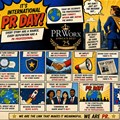
Proof: The 5th P for the AI era
What changes if this is right?
Organisations that understand this shift will begin investing differently.
Instead of asking how much content they can produce, they will ask whether their expertise is discoverable, verifiable and trusted.
Instead of chasing impressions, they will focus on building long-term authority.
Instead of viewing communications as the final stage of a campaign, they will embed strategic communications into leadership, governance and organisational decision-making.
The organisations that succeed won't necessarily have the loudest voices.
They will have the most trusted ones.

What communicators should do now
Three actions stand out.
- Build communications around expertise rather than visibility. AI increasingly rewards authoritative, evidence-based sources over volume.
- Invest in human verification. Every AI-assisted communication should be strengthened through editorial judgement, fact-checking and contextual understanding before publication.
- Position communications teams as strategic advisers rather than content producers. Their value lies not in writing faster than AI, but in asking better questions, protecting organisational trust and helping leaders communicate with clarity and credibility.

AI disruption is no longer theoretical
Nigeria's experience shows us that AI disruption is no longer theoretical. South Africa's rapid adoption demonstrates that this future is already arriving.
For communicators across Africa, the lesson is clear.
The Golden Age of Strategic PR will not be defined by who masters artificial intelligence first.
It will be defined by those who remain the most credible source in a world increasingly shaped by machines.
Because while AI may transform how information is delivered, trust will always remain profoundly human.