
 |
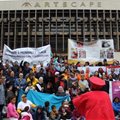
The Artscape's Marlene le Roux on leading with inclusion, compassion and courageAs South Africa marks the 70th anniversary of the 1956 Women's March, Artscape is celebrating another milestone of its own: the 20th edition of the Women's Humanity Festival. For CEO Marlene le Roux, the two anniversaries are deeply connected. 5 Aug 2026  "I am a survivor of apartheid and a post-polio survivor. My background taught me what it means to be born into exclusion, discrimination, prejudice and stereotyping," says The Artscape CEO, Marlene le Roux. Image supplied For more than two decades, le Roux has led one of Africa's leading performing arts institutions while championing inclusion, representation and social justice. A proud woman with a disability and a survivor of both apartheid and polio, she believes the arts remain one of society's most powerful tools for building empathy, challenging prejudice and creating spaces where every voice can be heard. In this Women's Month conversation with Bizcommunity, she reflects on leadership, legacy and why creating "a place for all" is more important than ever. The arts as a catalyst for changeThis year's Women's Humanity Festival carries the theme A Place for All, with the sub-theme Women in Action | Vroue in Aksie | Abafazi Kwintshukumo. For le Roux, commemorating both the Women's March and the festival is not simply about celebrating history; it is about recognising how much work still lies ahead. "Artscape opened the 20th edition of our Women's Humanity Festival while also marking 70 years since the 1956 Women's March and 55 years of Artscape itself," she explains. "The festival reminds us that the promise of that historic march still has a long way to travel into homes affected by gender-based violence, into disability communities that remain marginalised, and into LGBTQIA+ communities that continue to face exclusion." She believes the arts create conversations that politics alone often cannot. "I've seen how the arts and civil society together can open conversations about violence, disability and exclusion in ways that political debate sometimes cannot. That's why our Women's Humanity Walk on National Women's Day is so important. It will be led by persons with disabilities, joined by gender activists, members of the LGBTQIA+ community and concluded with an interfaith blessing. It has been designed so that no single identity group stands at the margins."  Image supplied A leadership journey shaped by resilienceLe Roux's own journey has shaped the way she approaches leadership. At just three months old, she contracted polio after being denied the vaccine under apartheid because of the colour of her skin and where she lived. "I am a proud woman with a disability," she says. "I am a survivor of apartheid and a post-polio survivor. My background taught me what it means to be born into exclusion, discrimination, prejudice and stereotyping." Before joining Artscape, she taught music in the Eastern Cape, on the Cape Flats and in rural communities, experiences that strengthened her belief in the transformative power of culture. "My studies in music and education gave me political insight into how powerful the arts can be. They tell untold stories and bring together people from different cultures, languages and faiths." Creating a truly inclusive cultural institutionThat philosophy continues to guide her work at Artscape, where representation extends far beyond the performances audiences see on stage. "Nation-building is not just a slogan," she says. "It requires active programming, trust and constant dialogue." When she first arrived at Artscape, she focused on building trust within the organisation before reaching out to communities that had historically been excluded from the theatre. "The move to democracy changed policies, but it didn't automatically change institutions. Becoming an inclusive cultural space required awareness, planning, training and years of implementation." Today, she sees government theatres as places where society should ask difficult questions and imagine a better future. "The arts should be the vehicle through which society expresses its aspirations, debates its future and allows culture to evolve."  Image supplied Progress is worth celebrating, but much more to doWomen's Month, she says, offers an opportunity to celebrate the progress South Africa has made while also acknowledging the challenges that persist. "We have made significant strides in advancing women's rights since 1994, particularly in increasing women's participation in leadership across government, business and civil society." Yet legislation alone cannot transform lives. "I've learnt, sometimes painfully, that a policy on paper and a changed life are not the same achievement. Laws create rights, but only sustained social investment transforms those rights into lived reality." She credits grassroots organisations, activists and community movements with driving much of that change. "The Women's Humanity Festival is our reminder that the race isn't over. The women of 1956 showed us what is possible when women stand together. This festival is our commitment to continue putting those values into action." Fostering social cohesionWhile the institution celebrates its 55th anniversary, le Roux says its transformation remains an ongoing journey. "We continue asking ourselves one important question: who are we still not reaching?" She points to the creation of Artscape's Audience Development and Education Department in 2001 as one of the institution's defining achievements. "It became the cornerstone of our mission to democratise the arts, empower young people and develop future performers and audiences." Today, programmes such as the Women's Humanity Festival and Artscape's Rural Outreach initiatives continue to provide opportunities for emerging artists, women, young people and persons with disabilities to tell their stories. "Art is one of the most powerful tools we have for fostering social cohesion and bringing our diverse nation together." As the conversation draws to a close, le Roux returns to the legacy of the women who marched to the Union Buildings in 1956. "The courageous women of 1956 were not simply protesting a law. They were asserting their humanity. They were declaring that they belonged—in the streets, in the halls of power and in the fabric of the nation." A message to the next generationAs the conversation draws to a close, le Roux returns to the legacy of the women who marched to the Union Buildings in 1956. "The courageous women of 1956 were not simply protesting a law. They were asserting their humanity. They were declaring that they belonged—in the streets, in the halls of power and in the fabric of the nation." Her message to the next generation is equally powerful. "A state theatre should be the heartbeat where young people come to know themselves, nurture their creativity, become bold, ethical and socially responsible, and realise that their stories matter." For le Roux, the future of South Africa's cultural landscape depends on ensuring that every voice has the opportunity to be heard. "A nation without nurturing women, artists and spaces like theatres is a nation without heart and care." About Evan-Lee CourieGroup Editor: Retail and Lifestyle View my profile and articles... |