
MSCI Green Annual Property Index 2025 confirms a decade of outperformance by green-certified offices
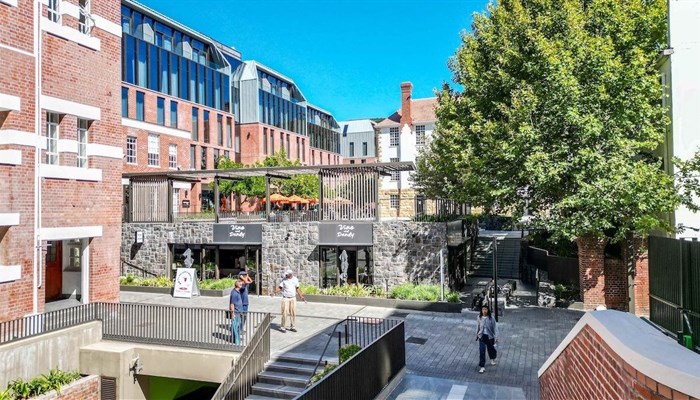
Published annually since 2016 by MSCI in collaboration with the Green Building Council South Africa (GBCSA) and sponsored by Growthpoint Properties (JSE: GRT), the 2025 MSCI Green Annual Property Index provides an independent, globally aligned assessment of how green-certified properties perform relative to their non-certified counterparts.
The latest index, based on performance to December 2025, found that green-certified Prime- and A-grade offices delivered an annualised total return of 6.98% over the past decade, compared with 5.26% for non-certified office assets. This 172-basis-point annualised advantage has accumulated steadily over time, resulting in the substantial return premium now reflected in the data.
Importantly, the findings span a full property cycle, encompassing periods of economic growth, market disruption and recovery. The consistency of the differential suggests that the advantages associated with green-certified property are increasingly structural, reflecting enduring occupier, operational and investment considerations rather than short-term market cycles.
The 2025 index covered a sample of 242 Prime- and A-grade office properties with a combined value of R54.8 billion, including 122 green-certified buildings. It also tracked the performance of 33 green-certified retail properties, reflecting the continued expansion of certification across the commercial property sector.
A decade of outperformance
While non-certified offices recorded a marginally higher total return in 2025, MSCI attributes this largely to a short-term rental recovery from a lower and lagging base, rather than a change in the underlying characteristics of green-certified assets.
The broader indicators that have underpinned the decade-long outperformance of green-certified offices remained firmly intact.
Green-certified office properties continued to generate significantly higher levels of income, producing 34% greater gross income per square metre than their non-certified peers during 2025. They also maintained a lower operating cost-to-income ratio of 41% compared with 48% for non-certified offices, highlighting the efficiencies that sustainable buildings can deliver over time.
Occupier demand likewise remained stronger. Green-certified offices recorded a vacancy rate of 10.3% compared with 13.1% for non-certified prime and A-grade offices, reinforcing the continued preference among many tenants for high-quality, resource-efficient accommodation.

Timothy Irvine, head of asset management: offices at Growthpoint Properties, points out that the decade-long track record reflects a growing alignment between occupier expectations, sustainability objectives and investment outcomes. "The MSCI Green Annual Property Index continues to demonstrate that sustainable buildings are not only delivering environmental benefits but also creating measurable value for occupiers and investors. Over time, we have seen increasing demand for buildings that offer greater operational and cost efficiency, resilience and quality environments for tenants.
"The long-term outperformance reflected in the index reinforces the strategic value of a strong portfolio built on resource efficiency and independently verified through green certification."
Stronger fundamentals support long-term value
The gap between green-certified and non-certified offices is evident across several key indicators.
In 2025, green-certified offices generated monthly net operating income of R152 per square metre, compared with R102 per square metre for non-certified assets. Higher rental levels, lower vacancies and stronger operational efficiency continue to support superior income generation.
These advantages are reflected in valuations as well. Green-certified prime and A-grade offices were valued at R21,251 per square metre in 2025, compared with R14,510 per square metre for non-certified equivalents. Green-certified assets also maintained a lower capitalisation rate, signalling continued investor confidence in the quality and resilience of their income streams.

According to Eileen Andrew, vice president: client coverage at MSCI South Africa, the significance of the index lies in its ability to reveal longer-term market trends rather than focusing on the results of any single year. "One year of performance never tells the full story. What makes the MSCI Green Annual Property Index particularly valuable is that it now provides a decade of consistent local evidence. While annual market conditions may vary, the data continues to show that green-certified offices benefit from stronger income generation, lower vacancies, greater operating efficiency and superior long-term return outcomes. These are characteristics that investors increasingly recognise and value."
Andrew says the cumulative outperformance achieved over the past decade points to a sustained market preference for properties that combine environmental performance with financial resilience.
The index also continued to track green-certified retail properties, which outperformed their non-certified counterparts during 2025. While the retail dataset remains relatively young, the results suggest that the benefits associated with certification are beginning to emerge across a broader range of property sectors.
Building confidence in sustainable real estate
For the GBCSA, the findings reflect both the growing maturity of South Africa's green building market and the important role that certification has played in providing a credible and consistent framework for measuring building performance over time.

Georgina Smit, CEO of the Green Building Council South Africa, says the index provides an increasingly valuable evidence base for the property sector. "Certification provides a credible, independent framework for measuring and communicating building performance. Over the past decade, the index has helped build a valuable body of local evidence, demonstrating how sustainable building practices can translate into measurable benefits for property owners, investors and occupiers. That evidence is helping to strengthen confidence in the business case for green-certified property and supporting more informed decision-making across the market.
“We have local primary data that shows how green building certification does not have to be a cost, it can actually be a competitive advantage. We need to spread the message of green and get every building in South Africa on a sustainability journey,” she says.
As one of South Africa's leading owners of green-certified property, Growthpoint continues to expand and optimise its portfolio of certified assets as part of its broader environmental, social and governance strategy. For Growthpoint, sustainable property development and ownership as an important contribution to building a more resilient built environment and supporting South Africa's transition to a lower-carbon future.
A decade ago, the investment case for green-certified property was still being tested. Today, the conversation has shifted from aspiration to evidence. As investors, owners and occupiers increasingly seek assets that combine operational efficiency, resilience and long-term value creation, the MSCI Green Annual Property Index is building a substantial body of local evidence showing how sustainable building practices can translate into measurable outcomes.
- MSCI Green Annual Property Index 2025 confirms a decade of outperformance by green-certified offices 11 Jun 2026
- Growthpoint and Threads for iKasi bring warmth and dignity to Tembisa learners for a 2nd year 9 Jun 2026
- Growthpoint Properties achieves record-low pricing on R1.8bn oversubscribed bond issuance 8 Jun 2026
- Reside Awards 2026 celebrates South Africa’s residential property pioneers 5 Jun 2026
- Growthpoint Gems Scholarship Programme marks 10 years 4 Jun 2026
 | CatchwordsCatchwords is born out of one of the original real estate and retail property marketing and communication agencies in South Africa. We think strategically, stand for simplicity and work with agility. |