
Renewables & Energy Efficiency
South32 and Eskom's renewable shift for Hillside smelter to protect local jobs
28 Apr 2026
 |
Standard Bank to finance Africa’s renewable energy boomIn 2025, Standard Bank saw Africa’s shift toward renewable energy financing outpace non-renewable energy by an 8:1 ratio. Reflecting this trend, even Eskom, which has traditionally relied on coal, has launched a new business unit focused on developing utility-scale renewable energy projects. With this momentum, the financial institution is energised to finance the continent’s clean energy boom. 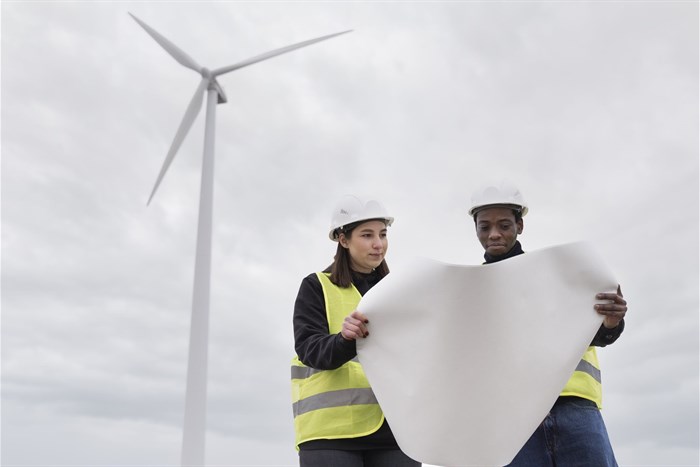 Image credit: freepik Almost 600 million people across Africa are still without access to reliable electricity; addressing the energy deficit remains one of the most significant drivers of socio-economic development on the continent. In line with Africa’s energy transition, Standard Bank has committed to mobilising R100bn in green finance by 2028. The time is nowThe scale and pace of Africa’s renewable energy development are being driven by a combination of policy alignment, declining technology costs, growing investor demand and the need to address climate risk while expanding energy access. Green energy development represents a complex balancing act between decarbonisation, economic growth and social inclusion. Boitumelo Sethlatswe, Standard Bank’s head of sustainability, says: “The shift we are seeing reflects a structural change in how energy systems are being built across the continent. “Renewables are no longer a marginal addition; they are becoming critical to capacity. “Importantly, this transition is not only about reducing emissions but about expanding access to affordable, reliable energy in a way that supports inclusive growth. “Our focus is on ensuring that as we scale renewable energy, we also create jobs, support communities and build resilient economies that can withstand future climate and economic shocks” A just transition in Africa means recognising development realities while accelerating sustainable solutions. Standard Bank says that while it is proud of its role as one of the largest renewable energy funders in Africa, it recognises that non-renewable energy sources continue to play a significant role in many African economies. Still, it’s committed to supporting a just transition toward a low-carbon economy that is fair, inclusive and beneficial for all. Renewables & Energy Efficiency South32 and Eskom's renewable shift for Hillside smelter to protect local jobs 28 Apr 2026 Significant opportunityThe acceleration of renewable energy investment is being driven by solar, wind, and hybrid energy solutions that incorporate battery energy storage systems. From a financing perspective, the scale of the opportunity is significant. Unlocking Africa’s renewable potential requires sustained investment in generation, transmission and enabling infrastructure, along with innovative financing mechanisms that can mobilise capital at scale. Standard Bank plays a leading role in structuring and funding energy projects, with a growing proportion of activity directed towards sustainable finance. Sasha Cook, Standard Bank head of sustainable finance, corporate and investment banking, says: “The energy transition in Africa is increasingly being defined by where capital is flowing. “What we are seeing is a clear reallocation towards renewable energy, supported by strong fundamentals and improving project economics. “As at the end of the 2025 financial year, Standard Bank had already mobilised 62% of its R450bn sustainable finance target, reflecting strong momentum and consistent delivery against its commitments. “In 2025, the bank mobilised R47.1bn in green finance, including significant funding for renewable energy projects.” Building momentumStandard Bank’s growing renewable energy pipeline illustrates this momentum in practice. Recent transactions include acting as sole mandated lead arranger for the 506MW Khauta South and West Solar projects in the Free State, which will supply over 1,000 GWh annually to a diversified portfolio of corporate off-takers via wheeling arrangements. The bank is also a key financier of Seriti Green’s 465MW Ummbila Emoyeni wind portfolio in Mpumalanga, now the largest privately owned wind platform in South Africa, and of Red Rocket’s 400MW Overberg Wind Farm, which will supply major industrial users, including Richards Bay Minerals. In addition, Standard Bank supported the 75MW Du Plessis Dam Solar project in the Northern Cape, as well as innovative trading structures through Etana Energy. Beyond generation, there is a growing focus on the broader energy ecosystem, including grid stability, energy storage and decentralised solutions. These components are critical to ensuring that renewable capacity translates into a reliable and consistent power supply.  Renewables & Energy Efficiency African Rainbow Energy's new deal to speed up private power for SA businesses 12 May 2026 Central to the economyThe shift also has wider economic implications. Renewable energy projects are creating new value chains, supporting local industries and enabling greater participation in the global green economy. Regulatory complexity, financing constraints and infrastructure gaps slow deployment in certain markets. Addressing these barriers will require coordinated action across governments, financial institutions and the private sector. As the continent navigates this transformation, the interplay between sustainability and development will remain central. The current 8:1 ratio in favour of renewable energy is a marker of structural change, signalling that Africa’s energy future is increasingly being supported by cleaner, more inclusive and more resilient systems. |